



Company Overview
Honeywell Aerospace supplies critical technologies for commercial aviation, business aircraft, defence and space, including avionics, navigation, power systems and flight controls.
Its established aircraft presence generates recurring aftermarket revenue through maintenance, replacement parts and upgrades. The opportunity is substantial—but strong demand alone does not guarantee attractive returns.
Demand Is Strong, Profitability Is Under Pressure
Second-quarter 2026 results, reveal a mixed picture:
Revenue: $4.522 billion, up 5% year over year.
Net income: $256 million, versus $852 million a year earlier.
Adjusted EBIT: $995 million, down 7%.
Adjusted EPS: $1.87, versus $2.75.
Order backlog: $18.154 billion, up 9%; trailing 12-month orders rose 8%.
Commercial aftermarket sales increased 8%, original-equipment sales rose 6%, and defence and space sales grew 3%.
However, management cut its 2026 organic sales growth outlook from 7–9% to 4–5% and reduced adjusted EBIT guidance from $4.65–4.75 billion to $4.35–4.45 billion. Adjusted EPS guidance was set at $7.60–7.90, while second-half free cash flow was projected at $1.0–1.5 billion.
The central concern: Customers are ordering, but supply constraints, higher costs and operational inefficiencies are preventing demand from translating into stronger profitability.
Major Growth Drivers
Commercial aviation and aftermarket: A large installed aircraft base creates recurring demand for maintenance, components and upgrades.
Defence and space: Military modernisation, navigation systems and advanced aerospace technologies offer additional opportunities.
Aircraft production: IndiGo selected Honeywell’s avionics and power systems for an order covering 810 Airbus A320neo-family aircraft. This offers long-term potential, but selection does not guarantee immediate revenues.
Technology and innovation: Upgrades focused on safety, navigation, fuel efficiency and reliability could support future growth.
Greater strategic control could help management improve production, allocate capital efficiently and strengthen margins. The real test is whether the $18.2 billion backlog can be converted into profitable sales and sustainable cash flow.
Key Risks
Supply-chain constraints: Production delays could prevent the company from meeting customer demand.
Margin pressure: Higher costs and an unfavourable product mix could continue to erode profitability.
Industry cyclicality: Aviation demand, aircraft production and defence procurement are sensitive to economic and policy changes.
Execution risk: Failure to improve production, margins and cash generation could weaken the investment case despite a strong backlog.
Technical Outlook
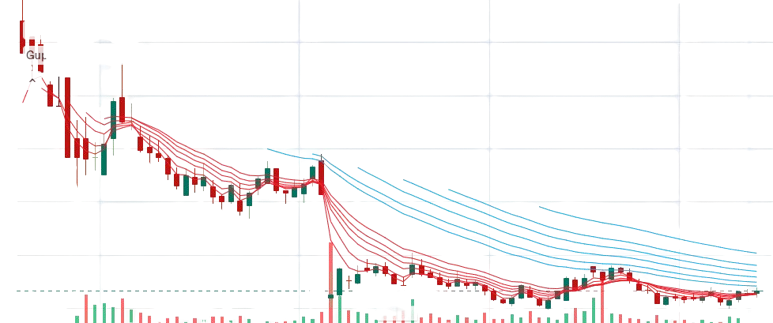
HONA has undergone a significant correction, but the recent price action suggests that the stock may be completing a base formation after an extended decline. The narrowing moving averages and relatively stable price action near recent lows indicate a possible loss of downward momentum and the early stages of recovery.
If the stock sustains this base and buying interest strengthens, a recovery could develop into a meaningful upside move. A breakout above the immediate resistance zone, supported by stronger volumes, would provide a more convincing signal that the reversal is gaining traction.
Technical view: Early-stage recovery candidate. Watch for base confirmation, improving momentum and volume-backed breakout before drawing a stronger bullish conclusion.
Investment Thesis and Conclusion
Honeywell combines specialised technology, an established aircraft presence, recurring aftermarket demand and exposure to aviation and defence spending. Its substantial backlog offers a foundation for future growth.
Yet the reduced 2026 guidance is a clear warning: demand is not the problem; converting it into profitable growth is.
The investment case will strengthen if supply constraints ease, margins recover and free cash flow improves. Investors should distinguish the long-term business potential from the near-term risks.
Overall view: Worth monitoring for operational improvement and a confirmed technical reversal. A strong backlog is encouraging, but execution, valuation and the price paid will ultimately determine shareholder returns.
Disclaimer
This report is for educational and informational purposes only and is not investment advice or a recommendation to buy or sell any security. The author does not hold shares of Honeywell Aerospace and has no affiliation with the company.
Financial information is based on publicly available company disclosures; forecasts and price scenarios are illustrative, uncertain and not guaranteed. Investors should conduct their own research and consider their risk tolerance before making investment decisions.