



FORMFACTOR, INC. (NASDAQ: FORM) supplies advanced equipment for testing semiconductor wafers and chips. Its probe cards and measurement systems are increasingly relevant to the AI semiconductor boom, particularly as demand grows for advanced GPUs, high-bandwidth memory (HBM) and more complex chip designs.
NVIDIA’s latest outlook has once again put AI-chip demand in the spotlight. This renewed attention could bring semiconductor testing companies such as FormFactor into greater investor focus. FormFactor is not a direct NVIDIA proxy, but it operates in an important part of the semiconductor supply chain. Its growth opportunity is supported by expanding AI infrastructure, although customer concentration, industry cyclicality and execution risks remain important considerations.
Investment View: FormFactor offers an attractive long-term growth, with AI-driven chip complexity providing an important tailwind. NVIDIA’s developments may add to sector visibility, but the investment case must ultimately rest on FormFactor’s own earnings growth, execution and market position.
Business Model and Competitive Position
FormFactor operates through two businesses:
Probe Cards: Its larger business, supplying precision interfaces that connect semiconductor wafers to test equipment. These help identify defects before packaging and improve manufacturing yields across logic, foundry and memory chips.
Systems: Probe stations, thermal and cryogenic systems, and optical testing equipment used in semiconductor research, development and production testing.
Probe cards wear out and must be replaced as chip designs and testing needs evolve, creating repeat demand. However, orders remain linked to customer production plans and the semiconductor cycle.
Industry outlook and growth opportunities
Growing demand for AI accelerators, high-bandwidth memory, advanced processors and chiplet designs is increasing the need for sophisticated semiconductor testing. The source report cites SEMI forecasts of $149 billion in global 300mm front-end equipment spending in 2026, rising a further 16% in 2027, while semiconductor test equipment sales are projected to grow 31% to $15.3 billion. These are industry forecasts, not FormFactor guidance.
Key growth opportunities include:
HBM and DRAM: Higher HBM and DDR5 production supports demand for advanced memory probe cards.
Foundry and Logic: AI processors, networking chips and server CPUs require increasingly complex testing.
Silicon Photonics: Triton and the Keystone Photonics acquisition position FormFactor to address emerging optical-testing demand.
Teradyne Partnership: October 2026 collaboration combines Teradyne’s automated test platforms with FormFactor’s probe technologies. Teradyne also invested $300 million in the company.
US Capacity Expansion: Its Texas facility is expected to increase domestic probe-card capacity. A $24.2 million state grant supports the project, though returns will depend on utilisation, yields and customer qualification.
Financial performance: a strong FY2026 recovery
FormFactor delivered strong growth in the first nine months of FY2026. Revenue rose 34.2% to $764.9 million, while Q3 revenue increased 38.4% to $280.5 million year-on-year.
Q3 profitability also improved sharply:
Gross margin: 54.7%, against 39.8% a year earlier.
Net income: $73.8 million, versus $15.7 million.
Diluted EPS: $0.93 GAAP and $1.04 non-GAAP, compared with $0.20 and $0.33 respectively.
Growth was broad-based. Nine-month Probe Cards revenue increased 35.3%, Systems revenue 29.6%, DRAM 45.2% and Foundry and Logic 32.2%.
Earnings Quality: The improvement reflects stronger demand, product mix and operating efficiency. However, Q3 gross profit included approx $8.6 million in tariff refunds, adding around 3.1 percentage points to gross margin. The nine-month benefit was about $9.4 million. As these are non-recurring benefits, investors should focus on whether margins remain strong without them.
Cash flow, balance sheet and capital efficiency
Cash generation improved significantly.
Nine-month operating cash flow reached $211 million, against $69.4 million a year earlier. After $64.4 million in capital expenditure, free cash flow was approximately $146.6 million.
In September 2026, cash and marketable securities totalled $395.4 million, against borrowings of just $11.4 million. With an undrawn $150 million credit facility, FormFactor has a strong net-cash position.
Capital allocation and dilution
Teradyne’s $300 million investment closed on 9 November 2026 through the issue of 2,234,887 new shares, approximately 2.8% of the pre-transaction share count. This is dilution, but it brings substantial capital and a strategic partner.
The company also uses share repurchases and employee equity issuance. Investors should assess future returns on the new capital against the additional shares issued.
Valuation: growth is not the same as cheap
At $73.30 per share, FormFactor’s market capitalisation is approximately $5.75 billion, based on 78.4 million shares outstanding. Its valuation has moderated following the sharp correction, with a trailing P/E of approximately 33.7 times, forward P/E of 18.1 times and price-to-sales ratio of 5.86 times. Enterprise value is approximately $5.38 billion, with EV/EBITDA at around 21.4 times.
Valuation View: The correction has made FormFactor more interesting, with its forward earnings multiple appearing more reasonable. However, further upside will depend on sustained earnings growth, healthy cash generation and successful capacity expansion.
Technical outlook: recovery attempted and failed
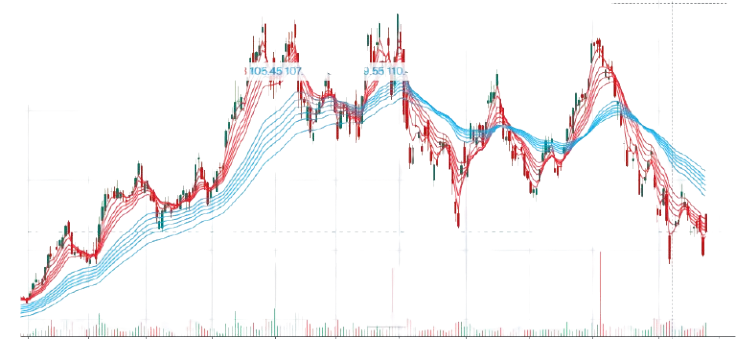
FormFactor’s brief rebound to $81.57 on 23 Nov 2026 proved short-lived. The stock fell 10.14% on 24 November, closing at $73.30, almost wiping out the previous session’s 11.7% gain. Trading volume remained elevated at approximately 2.13 million shares.
Weinstein Stage: FORM remains in Stage 4 (declining). A recovery above $76–80 would be an initial improvement, while a sustained move above $80–85, supported by stronger volume and improving relative strength, would provide better evidence of a turnaround. The 200-day average near $92 remains a more significant hurdle.
Technical View: The sharp reversal following the November 23 bounce is a warning that buying interest remains fragile. Investors should wait for a sustained recovery above key moving averages, improving RSI and stronger relative performance before considering fresh positions.
Key Risks
Customer concentration: Heavy reliance on SK hynix makes revenue vulnerable to changes in its orders.
Competition: Sustaining technological leadership requires continuous investment.
Execution: Delays or weak utilisation at the Texas facility could hurt returns.
Trade and geopolitics: Tariffs and export restrictions may disrupt costs and supply chains.
Dilution: Teradyne’s share issuance and employee stock compensation increase the share count.
What would change my mind?
The bullish case would strengthen if revenue growth continued across Probe Cards and Systems; HBM and Foundry & Logic orders remain firm; margins hold up after one-off benefits; the Texas facility ramps successfully; and operating cash flow keeps pace with earnings. Technically, a sustained recovery above key moving averages, improving GMMA and stronger relative performance would add confirmation.
Falling orders, weaker cash conversion or poor factory utilisation would require a reassessment.
Investment Verdict: A Promising Growth Story
FormFactor is well positioned to benefit from rising demand for AI chips, HBM and advanced semiconductor testing.
Strong FY2026 growth, a healthy balance sheet, the Teradyne partnership and capacity expansion support its long-term prospects.
Near-term caution remains warranted due to customer concentration, some one-off support to margins and a share price yet to confirm a technical reversal.
Outlook: FormFactor is a promising business worth watching. Sustained earnings growth, successful capacity expansion and improving price momentum could turn the current weakness into an opportunity.
For now, a patient, valuation-conscious approach is preferable, with staggered entries to accumulate gradually and potentially enhance long-term returns while managing downside risk.
Financial and operating figures are drawn from company disclosures cited in the research. Market price, valuation and technical indicators reflect snapshots around 23–24 November 2026 and may change. Industry projections are estimates, not FormFactor guidance.
Disclaimer
This report is for informational and educational purposes only and is not investment advice or a recommendation to buy or sell any security. It is based on publicly available information believed to be reliable, but may contain errors or omissions and should be independently verified. The writer has no association or business connection with FormFactor, Inc. or its management and has not contacted the company or its management for this research. Readers should conduct their own due diligence and consult a qualified financial adviser before making investment decisions.