


Thinking beyond the Stock
Identifying a good company is only part of the challenge but understanding the economic environment, recognising market expectations, managing risk and knowing when to change course can be equally important.
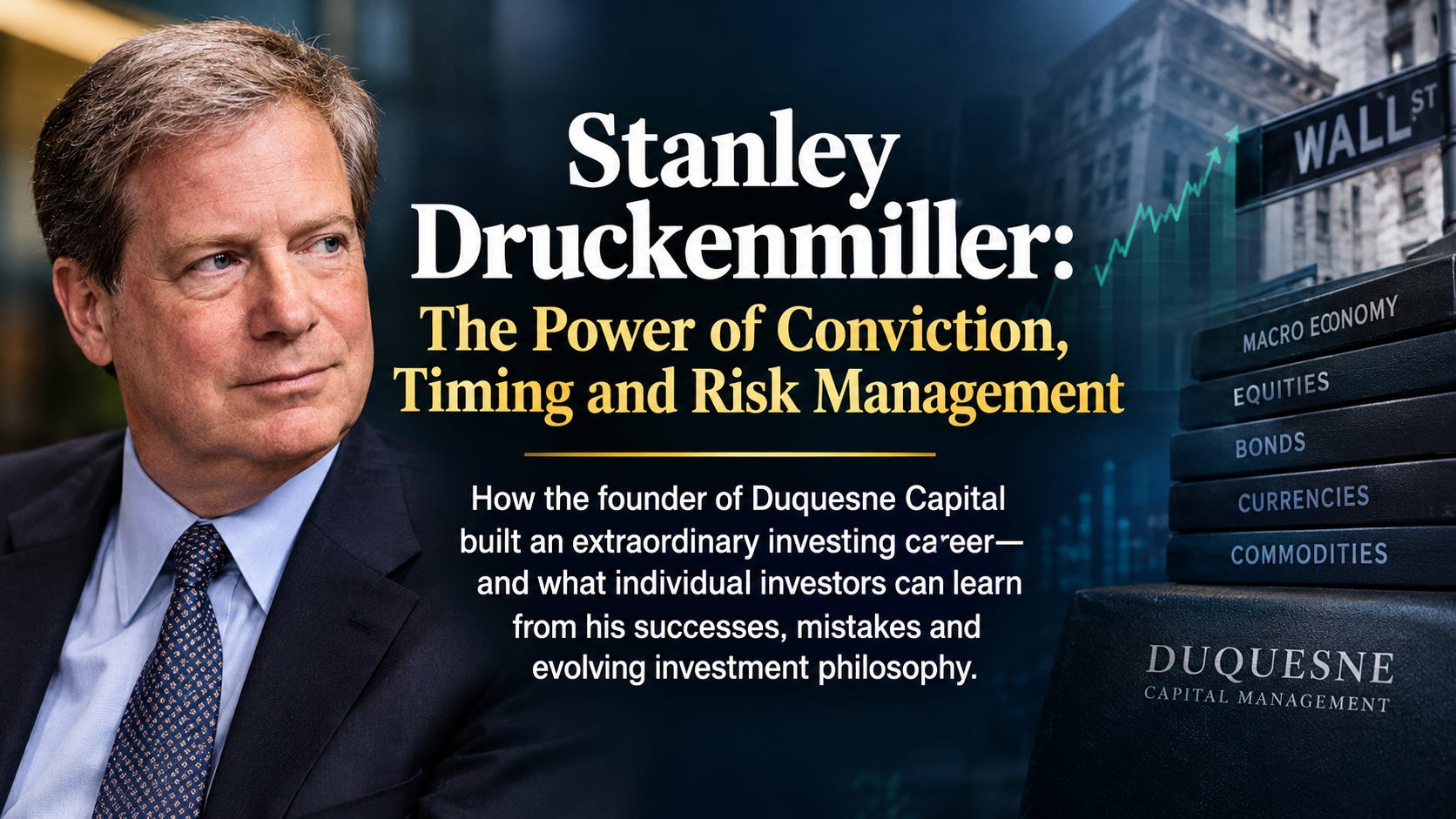
Stanley Druckenmiller, one of the most prominent macro investors of his generation, built his reputation by combining these disciplines. Rather than focusing exclusively on individual companies, he studies the interaction between economic growth, interest rates, liquidity, government policy and financial markets.
His career spans the creation of Duquesne Capital Management, his collaboration with George Soros at the Quantum Fund and his subsequent transition to Duquesne Family Office.
His experience offers a valuable lesson: successful investing is not simply about predicting the future. It is about identifying opportunities, allocating capital intelligently and responding when the evidence changes.
From Duquesne Capital to Duquesne Family Office
After studying economics at Bowdoin College and working in equity research and portfolio management, Stanley Druckenmiller founded Duquesne Capital Management in 1981, reportedly with around $1 million in assets.
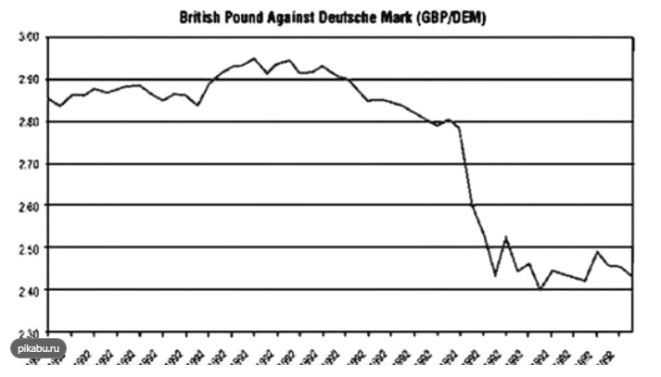
In 1988, he joined George Soros’s Quantum Fund. Their most famous trade came in 1992, when they bet against the British pound, demonstrating how economic fundamentals and unsustainable government policies can create major investment opportunities.
Druckenmiller also learned from mistakes. During the late-1990s technology boom, he sold tech stocks too early, re-entered near the market peak and suffered losses—an example of how the fear of missing out can undermine discipline.
In 2010, he returned outside investors’ capital and closed Duquesne Capital, continuing to invest through Duquesne Family Office, which manages his personal wealth.
Understanding His Investment Philosophy
Druckenmiller’s approach is not a mechanical formula. It combines macroeconomic analysis, fundamental research, market behaviour and active portfolio management.
Liquidity and central-bank policy matter; Interest rates, credit availability and monetary policy influence asset valuations and investors’ willingness to take risks. Druckenmiller therefore considers the broader financial environment before committing capital.
A company may have strong earnings prospects, but its stock can still struggle if valuations are excessive or financial conditions deteriorate.
The lesson is to examine both the quality of the business and the environment in which it operates.
Think across markets, not just stocks; Druckenmiller’s macro approach considers equities, bonds, currencies and commodities. Sometimes an economic view can be expressed more directly through a currency or bond position than through an individual company.
This flexibility helps investors avoid forcing an investment simply because they feel compelled to participate in a particular market.
Concentrate when conviction is justified; Druckenmiller has argued that investors should identify their strongest opportunities rather than distribute capital indiscriminately across numerous ideas.
However, concentration must be accompanied by rigorous risk management. His professional approach is not a justification for retail investors to place excessive amounts of money into a single stock.
The practical lesson is to distinguish between a genuinely well-supported investment thesis and confidence driven by enthusiasm or recent price performance.
Change your mind when the evidence changes; An investment thesis is a hypothesis, not a permanent commitment. A company’s competitive position can weaken, valuations can become excessive, and macroeconomic conditions can change.
Druckenmiller’s approach emphasises responding to new information rather than defending an earlier decision simply because capital has already been committed.
Risk management is part of the investment thesis; Risk involves more than the percentage invested in a stock. Correlation between holdings, liquidity, leverage, volatility and the possibility of sudden market changes also matter.
The objective is not to avoid every loss. It is to prevent a mistaken view from causing disproportionate damage to the portfolio.
Three Experiences That Define His Career
The 1992 British pound trade: Recognising an unsustainable policy
UK struggled to maintain sterling’s position within the European Exchange Rate Mechanism as economic conditions put pressure on its currency policy.
Druckenmiller and Soros recognised the tension between the government’s exchange-rate commitment and the economic conditions required to defend it. Their position against sterling became one of the most famous macro trades in financial history.
Government policy and economic reality can diverge. When a policy becomes increasingly difficult to sustain, the gap may create an investment opportunity. But timing, leverage and the cost of maintaining a position remain critical risks.
The technology bubble: When FOMO overrides discipline
During the late-1990s technology boom, Druckenmiller initially reduced exposure to technology stocks because he considered valuations excessive. As prices continued rising, he became frustrated by the gains he was missing and re-entered the market near its peak.
This episode is particularly instructive because it was not a triumph. It showed how even experienced investors can abandon their own analysis when the market moves against their expectations.
Three behavioural traps were at work: fear of missing out, regret over missed gains and the assumption that a powerful trend would continue.
A stock’s continued rise does not automatically invalidate a valuation concern. Investors should avoid confusing a rising price with improving investment value.
Looking beyond fashionable investment themes
In a Morgan Stanley interview, Druckenmiller discussed opportunities beyond the crowded AI trade. One example was Teva Pharmaceuticals, which he described as an apparently unexciting generic-drug business trading at roughly six times earnings at the time of the discussion.
The point is not that every low-multiple pharmaceutical company is attractive. Rather, investors should investigate situations where valuation, business prospects and market expectations appear misaligned.
Instead of asking only which stock is rising fastest, ask what the market may be overlooking—and what evidence could cause investors to reconsider their assumptions.
Practical Lessons for Individual Investors
Druckenmiller’s professional strategies may involve concentration, derivatives and leverage that are unsuitable for many retail investors. Nevertheless, several principles can be applied to ordinary stock investing.
First, build a thesis before buying. Understand the business, earnings drivers, valuation and industry outlook. Identify what the market expects and what evidence could invalidate your view.
Second, consider the economic environment. Interest rates, liquidity, inflation and currency movements can affect even fundamentally strong companies. A good business purchased at an excessive valuation can still produce disappointing returns.
Third, size positions according to risk. Strong conviction should not justify risking a disproportionate share of your capital. Set position limits and consider how much you could lose if the thesis fails.
Fourth, distinguish being early from being wrong. Stock may temporarily move against a sound thesis, but this does not mean every losing position deserves more time. Reassess the facts instead of automatically averaging down.
Fifth, recognise emotional mistakes. FOMO, regret, overconfidence and attachment to a stock can undermine sound research. Druckenmiller’s technology-boom experience demonstrates that knowledge alone does not eliminate behavioural errors.
Finally, evaluate your process, not just the outcome. A profitable trade may have been poorly reasoned, while a well-researched investment can still lose money. Record your rationale, risk limits and exit conditions, and review decisions over a series of trades.
A Simple Investment Checklist Inspired by Druckenmiller
Before entering a position, ask:
Do I understand the business and its earnings drivers?
Are interest rates, liquidity and industry conditions supportive or deteriorating?
Is the valuation reasonable relative to expected growth and risk?
Does price behaviour support the thesis, or contradict it?
What evidence would invalidate my investment view?
Is my position size appropriate if the trade goes wrong?
Am I acting on evidence rather than FOMO or social-media excitement?
Will I reassess the investment when new facts emerge?
This is an educational checklist inspired by publicly discussed principles, not a proprietary Duquesne investment model.
Conclusion: Conviction Matters, but Adaptability Matters More
Stanley Druckenmiller’s career demonstrates that successful investing requires more than bold bets. It demands independent thinking, sound research, precise timing and disciplined risk management.
The 1992, pound trade highlights the rewards of recognising market mispricing, while his technology-boom mistakes reveal how fear of missing out can derail even experienced investors.
For individual investors, the lesson is simple: Think independently, act with conviction when evidence supports it, protect capital when you are wrong, and never be afraid to change your mind.
Long-term success is not about being right every time—it is about making better decisions consistently and managing mistakes wisely.
Stay Connected!